
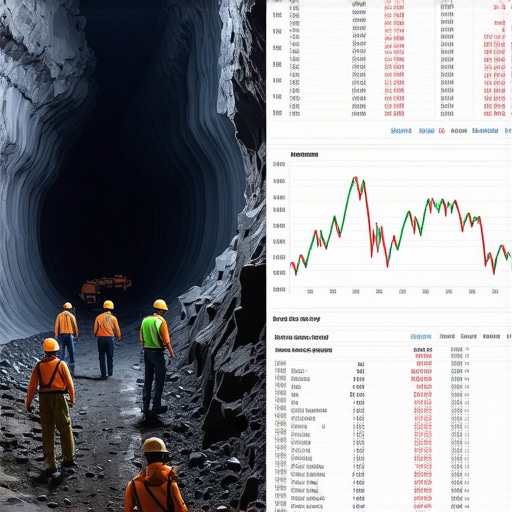
The Complex Dynamics Between Gold Prices and Mining Sector Performance
In the realm of precious metals investment, a perplexing pattern persists: the gap between gold’s spot price and the performance of its mining equities and physical supply chains. This divergence raises critical questions for investors and industry analysts alike, demanding an expert-level examination rooted in macroeconomic trends, operational constraints, and market psychology.
Intrinsic Challenges of Gold Mining Profitability Amid Price Fluctuations
One of the primary reasons for the lagging performance of the mining sector relative to spot prices lies in the high costs and logistical complexities associated with gold extraction. Factors such as declining ore grades, geopolitical risks in key mining jurisdictions, and environmental regulations have incrementally increased the marginal cost of production. Consequently, even when gold prices ascend, miners may not realize proportionate gains due to operational delays and increased capital expenditure.
Market Sentiment and Investor Behavior: The Psychological Barrier
Market sentiment plays a crucial role in this decoupling. The miners’ stocks are often viewed through a lens of speculative perception, with investors wary of over-leverage or unanticipated regulatory shifts. This cautious attitude suppresses the sector’s rally, despite favorable gold spot movements, leading to underperformance that contravenes traditional supply-and-demand models.
Liquidity Constraints and Capital Allocation in Mining Developments
Furthermore, the capital-intensive nature of gold exploration and development necessitates long-term planning. During periods of rising gold prices, mining companies face delays due to project financing complexities, permitting processes, and technological upgrades. Such lag effects result in a stickiness factor, where supply increases only after significant gestation periods post-price escalation.
A Closer Look at Central Bank Gold Purchases
Another dimension influencing this disparity is the role of central banks, which have markedly increased their gold holdings in recent years (source). Their strategic accumulation often occurs through wholesale purchasing rather than speculative trading, impacting physical demand trends and holding prices steady independently of mining output fluctuations.
Why Do Mining Stocks Fail to Mirror Gold’s Bullish Trends, and When Will They Catch Up?
This ongoing disconnect underscores the importance of differentiating between spot price movements and the underlying operational realities of gold miners. Analysts forecast that sector performance will eventually align with spot trends once market confidence stabilizes and new projects come online. For investors, this divergence presents opportunities and risks that require nuanced understanding of industry fundamentals and geopolitical drivers.
For further insights into how industry dynamics influence investment outcomes, explore this detailed analysis. As the sector evolves, maintaining a vigilant, expert perspective remains essential to navigating the complex landscape of gold investments.
Unraveling Market Psychology Behind Sector Underperformance
While gold’s spot price consistently responds to macroeconomic stimuli—such as inflation fears and geopolitical tensions—its mining stocks frequently underperform, creating a paradox for investors seeking leveraged exposure. This divergence is rooted in investor psychology, where the perceived risks of mining equities—like operational hazards, environmental liabilities, and regulatory hurdles—overshadow the potential upside during bull markets. Understanding this landscape requires an in-depth grasp of how sentiment and risk appetite influence sector dynamics, often decoupling them from bullion price movements.
Operational Lag and the Real Cost of Supply Expansion
Another critical factor is the inherent delay in bringing new mining projects online. Even with rising gold prices, the developmental cycle—encompassing exploration, permitting, technological upgrades, and construction—can span several years. During this period, mining companies may experience capital constraints or shareholder pressures that hinder rapid expansion, leading to a supply response that lags behind market fundamentals. This delay underscores the importance of examining industry catalysts, such as technological innovations or geopolitical stability, which can accelerate production ramp-up.
The Role of Central Bank Accumulation in Shaping Demand
Beyond market sentiment and operational delays, official sector demand exerts a profound influence on gold’s price trajectory. Recent data indicates that central banks are actively increasing their reserves, often through strategic purchases that are less reliant on market timing and more on long-term economic security considerations (source). This accumulated demand can sustain bullion prices even when mining stocks falter, highlighting the importance of analyzing institutional accumulation patterns as part of comprehensive investment strategies.
Is the Disconnect Between Gold Prices and Mining Stocks a Signal of Imminent Reversal, or a Long-Term Divergence?
This pressing question invites investors to scrutinize the underlying causes of the sector’s sluggish performance amid bullish bullion trends. By employing advanced technical indicators—such as the support and resistance levels, or analyzing volume trends—one can better anticipate potential catch-up rallies. Keeping a close eye on project approvals, geopolitical developments, and central bank policies will also aid in gauging whether this sector lag is merely a temporary phase or indicative of a deeper structural shift.
To deepen understanding of how macroeconomic policies and industry fundamentals intersect to shape gold investment opportunities, consider exploring this comprehensive guide. Staying ahead requires an integrative approach that combines technical analysis, fundamental research, and macroeconomic insight—ensuring your portfolio remains resilient amid complex market dynamics.
Harnessing Technological Innovations to Accelerate Gold Extraction Efficiency
Amidst increasing operational delays and rising extraction costs, breakthrough technologies are redefining the landscape of gold mining. Advanced methods like autonomous drilling, real-time geospatial analytics, and bio-mining are progressively reducing timeframes and environmental footprints. By integrating these innovations, miners can potentially bring new projects online faster, aligning supply expansion more closely with bullish price trends, thus mitigating the lagging performance historically observed during price surges.
What are the latest technological breakthroughs that could transform gold mining timelines?
Recent developments, such as AI-enabled resource estimation and drone-assisted exploration, are drastically improving resource discovery accuracy. Companies like Barrick Gold are investing in automation, leading to enhanced safety and productivity. According to a 2023 report by the International Institute for Sustainable Development (source), these technological advancements are expected to cut exploration and development periods by up to 30%, thereby enabling a more agile response to rising gold prices and policy shifts.
Investors seeking exposure to the sector should monitor the adoption rates of such innovations, as early winners often capitalize on operational efficiencies that bridge the gap between gold’s spot prices and miners’ stock performance.
Macroprudential Policies and Their Impact on Gold Mining Capital Flows
Complementing technological progress, macroprudential regulations significantly influence capital allocation within the gold sector. Stricter environmental standards, like those enacted under the European Green Deal, impose additional capital costs, causing project delays and constraining supply-side responsiveness. Conversely, policies incentivizing sustainable mining practices may unlock new funding streams and foster innovation-friendly environments.
How are international regulations shaping the future potential of gold mine development?
According to the World Bank’s recent environmental compliance review (source), countries implementing progressive policies—such as Canada and Australia—are creating more predictable regulatory environments. This stability encourages long-term investments and accelerates project approvals. For investors, understanding these policy landscapes is critical, as they directly affect project initiation timelines, operational costs, and ultimately, the sector’s capacity to synchronize with bullish price signals.
Analyzing geopolitical stability, environmental compliance costs, and fiscal incentives provides a comprehensive view of future supply dynamics—crucial for anticipating sector catch-up phases.
Investor Strategies in Navigating Sector Discrepancies
Given the complex interplay of technological, regulatory, and macroeconomic factors, devising robust investment strategies demands a nuanced approach. Recognizing early signs of sector turnaround, such as increased project approvals or technological adoption rates, allows for anticipatory positioning before broad market recognition occurs. Nonetheless, this requires vigilance and technical acumen, including monitoring sector-specific ETFs, sector ETFs, and actively managed mining funds.
For the sophisticated investor, employing options and derivatives to hedge against timing risks or to leverage emerging upward movements might prove advantageous. Moreover, diversifying across companies with varying operational efficiencies and regional exposures can mitigate country-specific regulatory or geopolitical risks.
Stay connected with industry expert analyses and emerging trend reports to refine your approach and capitalize on the potential for the sector’s long-term alignment with gold’s sustained bull markets.
 }
}
Harnessing the Power of Advanced Analytical Techniques for Gold Sector Timing
Precision in timing market movements can significantly enhance investment outcomes. The integration of machine learning algorithms, such as neural networks and support vector machines, enables analysts to detect nuanced patterns in gold price movements and mining stock behaviors. These techniques assimilate vast datasets—including geopolitical indicators, mining sector sentiment indices, and macroeconomic variables—to generate predictive models with heightened accuracy. Employing such sophisticated tools can illuminate subtle shifts signaling imminent alignment between bullion prices and industry performance, empowering investors to act proactively.
Are Geopolitical Tensions the Hidden Catalyst for Sector Divergence?
While macroeconomic factors broadly influence gold prices, geopolitical tensions often serve as the covert drivers that alter investor risk appetite and regulatory responses. Hotspots in regions like Central Asia, Africa, or South America—areas rich in gold reserves—exert outsized influence on the sector’s performance. Strategic analysis of geopolitical risk indices and conflict probability models reveals potential flashpoints that may precipitate supply disruptions or accelerate central bank acquisitions. By meticulously tracking these variables, investors can anticipate periods where sector underperformance may abruptly reverse, aligning with bullion price surges.

Leveraging Blockchain for Transparency in Gold Provenance
The advent of blockchain technology heralds a transformative shift toward transparency and traceability in the gold supply chain. Projects like the Gold Ledger and ORE Systems are pioneering platforms that record every transaction and movement of physical gold, reducing fraud and enhancing investor confidence. This technological leap not only reinforces the integrity of physical gold investments but also influences market dynamics by providing real-time data on gold origination and purity—factors increasingly decisive for institutional and retail investors alike.
How Can Digital Asset Integration Improve Gold Investment Portfolios?
The intersection of digital assets and traditional commodities opens new frontier strategies. Tokenized gold, representing physical holdings on blockchain platforms, offers liquidity, divisibility, and ease of transfer—traits that conventional gold investments lack. Embedding these instruments within diversified portfolios can improve risk-adjusted returns, facilitate seamless international transactions, and provide real-time valuation metrics. Remaining abreast of regulatory developments surrounding digital gold tokens is fundamental, as legal frameworks evolve amid growing institutional acceptance.
Are Transition Metals Disrupting the Gold Market Ecosystem?
Emerging as key competitors or complements, transition metals like lithium, cobalt, and nickel are gaining prominence in the context of green energy and technological innovation. These metals often share regional deposits with gold or demand similar mining expertise, prompting strategic shifts within the industry. The surge in demand for these materials influences capital allocation, project prioritization, and operational focus. Recognizing these trends enables investors to anticipate resource reallocation and capitalize on sectors poised for convergence or divergence with traditional gold markets.
Conclusion and Call to Action
Staying ahead in the complex terrain of gold investments mandates an integration of cutting-edge analytical methods, geopolitical vigilance, technological advancements, and macroeconomic trend analysis. By incorporating these multilayered insights, discerning investors can refine their strategies—balancing risk and opportunity with unprecedented sophistication. Embrace these emerging tools and perspectives to transform your approach, ensuring your portfolio remains resilient and prosperous amid evolving market tides. For tailored guidance informed by the latest industry intelligence, connect with leading experts and industry research platforms dedicated to elevating your gold investment strategy.
Strategic Insights for Gold Investors
Prioritize Asset Preservation During Market Turbulence
In uncertain macroeconomic conditions, holding tangible gold offers unmatched security, mitigating risks associated with fiat currency devaluation. Skilled investors allocate a significant portion of their portfolio to physical bullion, emphasizing quality and liquidity to safeguard wealth against geopolitical upheavals.
Leverage Modern Technologies for Market Timing
Employ machine learning tools and sophisticated technical analysis, such as support vector machines and neural networks, to identify subtle shifts in gold price patterns. These advanced methods enable proactive decisions, capturing emerging trends ahead of the mainstream market.
Monitor Central Bank Movements Closely
Official sector demand, especially from central banks, remains a powerful driver of gold prices. Analyze reserve reports and strategic accumulation data to anticipate potential price surges, recognizing that such institutional moves often signal impending market momentum shifts.
Integrate Transition Metals and Resource Synergies
Recognize that increasing demand for transition metals like lithium and cobalt can influence gold sector dynamics. Diversified exposure to commodities tied to green energy initiatives can offer hedge opportunities and reveal emerging growth avenues within the resource sector.
Evaluate Regulatory and Geopolitical Risks Digging Deeper
Examine policy environments across major mining jurisdictions. Countries with stable regulatory frameworks and proactive environmental policies foster faster project approvals, affecting long-term supply forecasts. Incorporate geopolitical risk indices into your strategic planning to avoid unforeseen disruptions.
Valuable Resources for the Advanced Gold Investor
- Buyers Guide to Authentic Gold: Verify your holdings with confidence.
- Sector Performance Analytics: Deep dives into dealer efficacy.
- Regulatory Landscape: Central bank activities and policy shifts.
Reflections from the Pinnacle of Expertise
Understanding the intricate relationship between physical gold, mining sector performance, and macroeconomic signals elevates your strategic advantage. As markets evolve, honing your insight into sector undercurrents—such as technological advancements, geopolitical shifts, and institutional movements—becomes imperative. Engaging with these nuanced layers ensures your portfolio remains resilient, adaptive, and positioned for long-term success in the complex arena of gold investments. For personalized guidance and to stay at the forefront of industry developments, connect with seasoned experts dedicated to refining your approach and turning insights into tangible outcomes.