

Deciphering Gold Price Trends: A Deep Dive into Historical Contexts and Market Signals
Understanding the fluctuations of gold prices, especially during periods of economic upheaval like the Great Depression, reveals complex interactions between macroeconomic factors and investor behavior. As an expert in precious metals analysis, I observe that gold’s historic role as a hedge and safe-haven asset often manifests uniquely in turbulent times, influenced by geopolitical tensions, currency devaluations, and shifts in monetary policy.
The Impact of Economic Catastrophes on Gold Versus Stocks
During the Great Depression, gold prices experienced significant volatility driven by plummeting stock markets and collapsing fiat currencies. Traditionally, investors historically turn to physical gold for stability, but the dynamics during that era demonstrate that gold’s performance isn’t immune to systemic risks. Analyzing historical data suggests that while gold often preserves wealth in crises, its price can be subject to liquidity constraints and regulatory interventions, which must be considered when evaluating its role versus equities.
Physical Gold Investment: Ensuring Authenticity and Value
Investing in physical gold, such as bars and coins, demands meticulous scrutiny to avoid counterfeit assets and ensure optimal leverage during market downturns. Techniques for authentication at home—like magnet tests and weight verification—are essential skills for investors. Furthermore, understanding the nuances between allocated and unallocated storage options can enhance trustworthiness and security in your investment portfolio.
Gold as a Strategic Hedge: Beyond Traditional Perspectives
While conventional wisdom regards gold as an effective hedge against inflation and fiat currency devaluation, contemporary analysis underscores its unique value during geopolitical crises and sovereign debt issuance surges. For instance, when U.S. sovereign debt levels reach critical thresholds, gold’s appeal as a non-counterparty risk asset intensifies, which can be monitored through emerging market demand and central bank holdings.
The Role of Gold Bars and Coins in Portfolio Diversification
Choosing between gold bars and coins hinges on liquidity considerations, premium structures, and storage efficiency. One-ounce bars frequently offer advantages for long-term holdings due to lower premiums over spot price, facilitating cost-effective diversification. Additionally, diversifying holdings across different sizes and types can mitigate risks associated with storage fees and authenticity concerns, as discussed in expert analyses.
Forecasting Gold Price Trajectories: Patterns and Technical Indicators
Projecting future gold prices entails analyzing macroeconomic indicators, such as treasury yields, currency indices, and global geopolitical developments. The use of moving averages and RSI (Relative Strength Index) helps identify overbought or oversold conditions, aiding investors in timing entry points. Recent data from authoritative sources indicate that geopolitical tensions and rising sovereign debt levels correlate with upward momentum in gold prices, reinforcing its status as a strategic asset.
How can advanced technical analysis refine gold price forecasts during unpredictable global events?
Combining multi-factor technical models with fundamental insights allows more precise timing and risk assessment for gold investments. For instance, integrating moving average crossovers with macroeconomic trend analysis can uncover early signals of trend reversals, crucial in volatile environments.
For further reading on the strategic deployment of gold in diversified asset allocations, consider exploring detailed reports by the World Gold Council, which provide authoritative insights into long-term trends and market fundamentals (World Gold Council Research).
Investors seeking to refine their strategies should continually analyze market signals, maintain awareness of geopolitical developments, and develop a disciplined approach to physical gold acquisition and storage, leveraging expert insights to navigate complex economic landscapes.
Interested in professional-level analyses? Dive into specialized content or contribute your insights to advance collective understanding of gold market dynamics.
Mastering Technical Analysis to Stay Ahead of Gold Market Swings
As the global economy faces unpredictable shifts, many investors turn to advanced technical indicators to gauge the future direction of gold prices. Recognizing patterns like moving average crossovers or divergence signals can provide a strategic advantage, especially when macroeconomic news contributes to volatility. For example, integrating the analysis of moving averages with macro trends helps pinpoint optimal entry and exit points, reducing reliance on guesswork during turbulent times.
Decoding Support and Resistance Levels in a Volatile Environment
Identifying key support and resistance zones is crucial for timing trades effectively. During periods of heightened geopolitical tensions or monetary policy shifts, these levels can shift unpredictably. Utilizing tools such as Fibonacci retracements or volume-weighted average prices (VWAP) enhances accuracy in detecting valid breakout signals, allowing investors to act decisively when gold approaches critical thresholds.
Why Do Expert Investors Rely on Multiple Indicators Simultaneously?
Relying solely on one indicator, like RSI or MACD, can be misleading amid sudden market shocks. Expert analyses suggest combining multiple signals—such as moving averages, RSI (Relative Strength Index), and Bollinger Bands—to confirm trend reversals. This multi-faceted approach minimizes false signals and fosters confidence during high-volatility periods, a strategy recommended by industry leaders to refine entry points and secure gains amidst uncertain geopolitical developments.
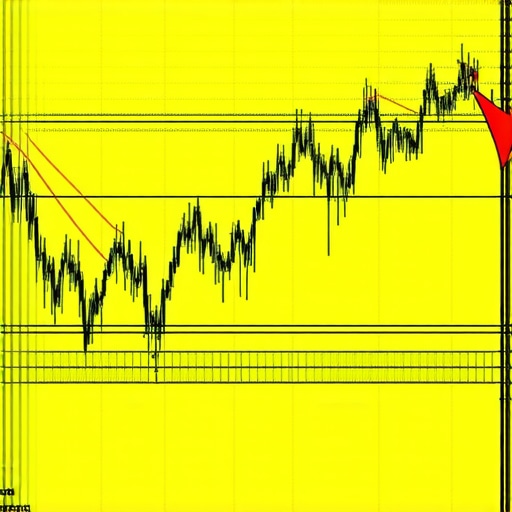
Can Integrating Fundamental Data with Technical Signals Improve Gold Forecast Accuracy?
Yes, blending macroeconomic data—like treasury yields, currency fluctuations, and sovereign debt levels—with technical signals can improve prediction reliability. For instance, rising treasury yields often precede price corrections, but when combined with oversold RSI conditions, they can also indicate buying opportunities. Understanding this interplay requires a nuanced approach, emphasizing the importance of continuous education and monitoring of real-time data.
How can sophisticated technical models adapt to sudden global shocks without generating false alarms?
Implementing adaptive algorithms that adjust parameters dynamically based on volatility measures enables more resilient predictions. Machine learning techniques that analyze large datasets—including news sentiment and geopolitical risk indices—are gaining prominence in professional circles, offering enhanced foresight beyond traditional models. Staying abreast of these innovations empowers investors to respond swiftly to market shifts and mitigate downside risks.
For more insights on balancing technical analysis with fundamental trends, the 3 key indicators provide practical tools for refining your gold investment strategy during periods of global uncertainty.
Engage with expert content regularly, test your strategies in simulated environments, and share your experiences to deepen collective understanding in this dynamic market.
Harnessing Market Cycles for Optimal Gold Acquisition Timing
Expert investors recognize that gold’s performance often aligns with well-established market cycles influenced by macroeconomic shifts and geopolitical tensions. By analyzing long-term cyclical patterns—such as the Kondratiev wave or commodity supercycles—one can anticipate periods where gold prices are poised for significant movement, enabling strategic accumulation during dips and profit-taking during rallies. Employing a combination of cycle analysis tools and macroeconomic indicator monitoring creates a nuanced approach that transcends basic trend-following.
Assessing the Role of Central Banks and Sovereign Holdings
The influence of central bank policies and sovereign gold reserves has escalated, especially as governments navigate complex debt landscapes. Central bank gold holdings, often increasing during periods of currency devaluation, signal shifts in monetary strategy that could preemptively impact market sentiment. Analyzing these holdings through annual reports and official disclosures provides an edge in understanding potential supply-side constraints and demand surges, which are critical in formulating sophisticated anticipation models for gold price movements.
How does central bank activity influence short-term gold price swings during geopolitical crises?
During heightened geopolitical tensions, central banks may adjust their gold reserves—either accumulating for strategic reasons or liquidating to meet liquidity needs—directly affecting spot prices. Such activities often precede or coincide with short-term price volatility, which savvy investors can exploit by monitoring official reserve updates, such as those published by the International Monetary Fund (IMF) and the World Gold Council. Recognizing these signals requires a keen understanding of global monetary policy and the capacity to interpret subtle shifts in reserve trends.

Incorporating Behavioral Economics into Gold Market Analysis
Beyond traditional fundamental and technical methods, integrating behavioral economics provides a richer perspective on market psychology. Gold’s reputation as a safe haven often amplifies herd behavior during crises, leading to overextensions—either bullish or bearish—that can be leveraged. Analyzing sentiment indicators, news media framing, and social media chatter through sentiment analysis tools offers early warnings of potential reversals or momentum shifts. Recognizing cognitive biases—such as herd mentality or anchoring—enables the astute investor to anticipate and react to irrational market moves.
Utilizing Derivative Instruments to Hedge and Amplify Gold Exposure
Advanced market participants often employ derivatives like options, futures, and ETFs to fine-tune their gold exposure. Structuring options strategies—such as straddles or collars—allows for risk mitigation during volatile periods, while futures contracts can be used to capitalize on short-term directional moves. Effectively integrating these instruments necessitates a deep understanding of leverage, margin requirements, and strike prices, enabling investors to amplify gains or protect against downturns without overexposing their core holdings.
What are the risks and rewards of employing leverage through derivative strategies in volatile markets?
Leverage can magnify both gains and losses, making it a double-edged sword. In turbulent geopolitical environments, poorly managed leverage may accelerate portfolio erosion, but when executed with disciplined risk controls—such as stop-loss orders and position sizing—it can serve as a potent tool for tactical trading. The key lies in continuous monitoring and adaptation to evolving market signals, supported by rigorous risk assessment protocols.
To deepen your understanding of sophisticated gold investment tactics in uncertain times, consult authoritative resources such as Sprott’s insights on professional gold strategies, which detail complex approaches leveraging derivatives, macro trends, and behavioral factors.
Stay vigilant: the landscape of gold investment is as nuanced as it is dynamic. Leveraging expert analysis, combining multiple indicator sets, and adapting rapidly to unfolding events are essential to maintaining an edge in this high-stakes arena.
Leveraging Macro Trends for Precise Entry Timing in Gold Markets
Recognizing cyclical patterns within the gold market can provide discerning investors with a strategic advantage. Long-term cycles, such as Kondratiev waves, often influence commodity trajectories, offering opportunities for tactical accumulation during downturns. Incorporating macroeconomic data—like global inflation rates, currency stability indices, and sovereign debt trajectories—enables a comprehensive view, aligning micro-level technical signals with macro trends for enhanced timing accuracy.
Spotlight on Central Bank Holdings: Key to Predicting Price Surges
Central banks’ gold reserve policies serve as pivotal indicators of future price movements. An uptick in official holdings often signals a strategic shift—either accumulation in anticipation of long-term gains or liquidation during liquidity crunches. Close examination of reports from entities like the IMF and the World Gold Council can reveal subtle reserve adjustments, providing an edge in forecasting short to medium-term price dynamics amidst geopolitical upheavals.
How Behavioral Economics Reveals Hidden Market Signals
Market psychology exerts profound influence over gold prices, especially during crises. Herd behavior, cognitive biases, and media framing can lead to overextensions or abrupt reversals. Leveraging sentiment analysis tools and crisis indicators—such as the VIX or news sentiment scores—can uncover early signs of irrational exuberance or panic, equipping investors to capitalize on or hedge against impending reversals. Understanding these human elements can be as vital as quantitative analysis.
Refining Risk Management with Derivative Strategies During Crises
Advanced investors utilize derivatives—options and futures—to craft bespoke risk profiles, ensuring resilience under volatile conditions. Employing protective puts or collar strategies can lock in gains or hedge against downside while maintaining upside potential. Mastery of leverage mechanics and margin management is essential; overextension amplifies risks, but disciplined application allows for agile responses, especially during geopolitical shocks or macroeconomic surprises.
Which Composite Indicators Provide the Best Signals in Volatile Environments?
Synergizing multiple technical signals enhances accuracy amid turbulence. Combining moving average crossovers with RSI divergence, Fibonacci retracement levels, and volume analysis can confirm genuine trend shifts. For instance, a bullish divergence on RSI occurring near a Fibonacci support zone, coupled with increasing volume, suggests a high-probability entry point. Such multi-layered confirmation reduces false alarms typical of transient volatility.
Advanced Analysis and the Integration of Real-time Data Streams
Emerging technologies—such as machine learning algorithms and big data analytics—empower traders to process vast streams of macroeconomic news, geopolitical developments, and market sentiment in real time. Adaptive models that re-tune parameters dynamically, based on volatility indices, can detect imminent trend reversals sooner than static systems. This integration optimizes timing, minimizes risk, and enhances decision-making agility during unpredictable global episodes.
Optimize Your Gold Portfolio Using Strategic Cycle Indicators
Aligning holdings with phase-specific cycles—expansion, peak, contraction, and trough—can amplify gains and mitigate losses. For example, accumulating during the decline phase of a commodity supercycle ensures cost-effective entry, while pruning during a peak conserves capital. Employing tools like Elliott Wave analysis or cycle oscillators provides nuanced insights, allowing for tailored position adjustments aligned with macroeconomic and geopolitical signals.
Deciphering the Influence of Sovereign Reserves and Policy Shifts
Monitoring nuanced shifts in sovereign holdings offers a predictive edge, especially during political shifts or debt crises. Small but consistent increases in gold reserves by central banks or sovereign wealth funds may presage impending price rallies. Analyzing official disclosures and statistical reports can reveal strategic positioning, aiding in anticipation of supply constraints or demand surges that could impact prices in the short to medium term.
Incorporating Behavioral and Derivative Analytics for Superior Outcomes
Blending insights from behavioral economics with derivative-based hedging strategies creates a powerful toolkit. Recognizing herd-driven price spikes enables timely entry or exit, while derivative contracts can be employed to hedge against tail risks. This dual approach enhances resilience, especially when navigating unpredictable geopolitical and macroeconomic shocks that characteristically induce rapid market oscillations.
For those committed to elevating their gold investment acumen, delving into advanced analytical frameworks—such as predictive modeling and sentiment-driven algorithms—can dramatically improve market responsiveness. Continual education, coupled with disciplined strategy execution, is the hallmark of success in mastering gold’s complex landscape during global crises. Engage with specialists, stay informed on emerging tools, and refine your approach to thrive amid uncertainty.
Leverage Macro Indicators for Precision Timing
Using macroeconomic signals such as inflation rates, currency indices, and sovereign debt levels enables investors to align their gold positions with fundamental trends, increasing the likelihood of successful entry and exit points during volatile periods.
Monitor Central Bank Moves Closely
Central bank gold reserve adjustments serve as subtle yet powerful indicators of future price movements. Recognizing patterns of accumulation or liquidation can provide a competitive edge in anticipating short-term surges or dips.
Capitalize on Behavioral Insights
Understanding market psychology, herd behavior, and sentiment shifts offers an often-overlooked advantage. Sentiment analysis and news framing can reveal irrational exuberance or panic, allowing for proactive positioning.
Integrate Derivative Tools with Caution
Advanced investors employ options and futures to hedge risk or amplify exposure, but these instruments require deep understanding of leverage and margin. Proper application enhances resilience against sudden shocks without overexposing the portfolio.
Analyze Long-Term Cycles and Patterns
Studying market cycles, such as Kondratiev waves or commodity supercycles, allows discerning investors to align accumulation strategies with broader trends, optimizing timing during downturns and rallies alike.
Use Dynamic Models Incorporating Real-Time Data
Emerging machine learning models and big data analytics process vast information streams—including geopolitical news and market sentiment—to adapt predictions swiftly, supporting timely decisions amidst uncertainty.
Recommend Resources for Advanced Insights
- World Gold Council Research: Provides comprehensive analyses on long-term trends and fundamentals—Explore here.
- Sentiment Analysis Platforms: Offer insights into market psychology shifts that influence gold demand.
- Financial Modeling Tools: Support dynamic prediction of price movements incorporating macro and micro data.