

Decoding the Complex Relationship Between Gold and Equities in Modern Portfolio Strategies
In the ever-evolving landscape of investment assets, understanding the nuanced interplay between gold versus stocks becomes paramount for seasoned investors seeking to optimize their portfolios amidst macroeconomic uncertainties. Historically, gold has functioned as a hedge against inflation and currency devaluation, while equities often serve as growth vehicles. Analyzing their relative performance requires a multi-layered approach grounded in market fundamentals and supply-demand dynamics.
How Do Gold Demand Trends Influence Its Correlation with Stock Markets?
The trajectory of gold demand trends significantly impacts its price behavior relative to stocks. Surges in demand—driven by geopolitical tensions, technological sector requirements, or central bank accumulations—can decouple gold from equities, providing diversification benefits. For example, during periods of financial turbulence, gold often exhibits an inverse correlation with stocks, acting as a safe haven. Conversely, when economic growth accelerates, both assets may experience alignment, driven by risk appetite.
Furthermore, emerging data indicates that rising central bank gold acquisitions influence global demand, shaping long-term supply and demand trends. The evolving landscape underscores the importance of monitoring gold market analysis to decode macroeconomic signals and inform strategic allocation decisions.
Investment Vehicles and Their Role in Diversification
Beyond physical gold, gold mutual funds and gold ETFs serve as accessible options for diversified exposure. Yet, investor caution is advisable, given the potential for counterparty risks and high expense ratios. Physical gold, particularly bullion bars and coins, remains the preferred instrument for long-term preservation of wealth, especially when considering gold IRA strategies.
Balancing Gold and Stocks in a Dynamic Market Environment
Constructing a resilient portfolio requires integrating gold demand and supply trajectories with broader economic indicators. For instance, rising gold supply constraints can signal impending price increases, enhancing the diversification appeal against equities vulnerable to cyclical downturns. Navigating currency devaluations and inflationary pressures becomes more effective when seasoned investors incorporate these layered insights into their asset allocation models.
What Are the Most Sophisticated Indicators to Predict Gold Price Movements?
Experts often leverage technical analysis, macroeconomic data, and geopolitical developments to forecast gold trends. Indicators such as moving averages, gold-to-silver ratios, and Treasury yields offer valuable signals for timing entry and exit points. Staying ahead of these indicators enables astute investors to capitalize on short-term volatility and long-term fundamental shifts.
For ongoing insights into gold market dynamics, consult resources such as the World Gold Council, which provides authoritative research on supply-demand fundamentals and the macroeconomic environment shaping precious metals investment.
Exploring these sophisticated layers of analysis can significantly enhance investment decision-making when juxtaposing gold against stocks, cementing a strategy rooted in knowledge and analytical rigor rather than guesswork.
Leverage Macro Indicators to Anticipate Gold-Stock Divergence
While many investors rely on traditional correlations between gold and equities, understanding the macroeconomic undercurrents that influence their divergence can provide a strategic edge. Key indicators such as market volatility indices, inflation expectations, and monetary policy shifts serve as vital signals. Recognizing these signals enables investors to position themselves ahead of trend reversals, enhancing portfolio resilience.
Can Central Bank Activities Create Sudden Shifts in Gold and Stocks’ Relationship?
Indeed, actions by central banks, such as aggressive accumulation or disposal of bullion, often precede notable shifts in asset correlation. An unexpected shift in central bank reserve policies can decouple gold from stocks, turning it into an independent hedge precisely when it’s needed most. Staying alert to these policy cues, backed by comprehensive market analysis, can be the difference between capitalizing on opportunities or suffering unnecessary exposure.
For investors seeking a broader understanding of how monetary policy impacts asset dynamics, consulting detailed research from sources like the Bloomberg Markets can add valuable context to technical and fundamental analyses.
Adopting a Tactical Approach to Asset Allocation in Uncertain Times
In a landscape where conventional correlations can swiftly change, deploying tactical asset allocation strategies allows for dynamic responses to shifting macro conditions. Techniques such as buying gold during inflation surges or adjusting stock exposure in anticipation of monetary tightening exemplify this approach. Experts advocate balancing short-term tactical shifts with long-term strategic positions rooted in a thorough understanding of gold market analysis to optimize risk-adjusted returns.
Engaging with market analysis tools and keeping abreast of geopolitical developments—like emerging trade tensions or international debt crises—further refines this dynamic approach, empowering investors to adapt swiftly and confidently.
How Can Investors Quantify the Real Impact of Supply-Demand Changes on Portfolio Diversification?
Quantifying supply-demand fundamentals involves analyzing price premiums, mining output trends, and geopolitical risks. For example, surges in premiums for specific gold bars often signal tight supply, which, when incorporated into diversification models, can enhance downside protection during equity downturns. Balancing this data with technical analysis creates a comprehensive framework for informed decision-making.
To deepen understanding of these dynamics, exploring resources like the World Gold Council’s research reports offers authoritative insights into global supply characteristics and their implications for portfolio management.
Engaging with these multifaceted analytical layers helps craft an investment stance capable of navigating complex market environments with agility and confidence, turning insight into advantage rather than vulnerability. Share your strategies or questions below—let’s deepen the discussion around mastering gold and stock relationships in uncertain times.
Maximizing Portfolio Resilience with Leading Macro Metrics
In the pursuit of robust investment strategies, discerning the subtle signals embedded within macroeconomic indicators becomes essential. Notably, metrics such as the ISM Manufacturing Index and Purchasing Managers’ Index (PMI) offer invaluable insight into economic momentum. A declining PMI may foreshadow economic contraction, prompting a savvy investor to increase gold holdings as a hedge against impending downturns, while a robust PMI could signal risk-on environments favoring equities.
Which nuanced indicators provide clarity amidst data volatility?
Indeed, measures like the Gold Price-S&P 500 correlation coefficient and the VIX volatility index serve as sophisticated tools for understanding market sentiment. A rising VIX often correlates with increased gold prices, highlighting its role as a safe haven during turbulence. Simultaneously, tracking the US Dollar Index (DXY) offers clues: a weakening dollar typically propels gold, given the inverse relationship, vital for multi-asset tactical adjustments.
For investors committed to precision, engaging with Federal Reserve monetary policy statements yields a panoramic view of the monetary landscape shaping these metrics. Understanding how rate hikes or cuts influence liquidity and risk appetite allows for anticipatory positioning, enhancing portfolio resilience.
Dissecting the Impact of Geopolitical Risks on Asset Correlations
Geopolitical events—trade wars, regional conflicts, or international sanctions—often trigger abrupt shifts in asset relationships. During such episodes, gold’s inverse correlation with equities frequently intensifies, yet certain geopolitical scenarios may paradoxically dampen this effect. For instance, global crises impacting multiple assets may drive correlations higher, reducing diversification benefits.
Advanced investors utilize tools like the Council on Foreign Relations geopolitical risk indices, which quantify potential conflict levels and their market implications. Reviewing these indices alongside credit default swaps (CDS) spreads provides a nuanced understanding of risk premiums and liquidity dynamics, informing strategic rebalancing.
Furthermore, fostering a layered perspective involves analyzing market implied volatility measures across sectors and regions. Such depth enables investors to differentiate between systemic shocks and localized disturbances, tailoring their gold-stock allocations accordingly.
How to integrate these complex signals into a cohesive tactical plan?
Combining macroeconomic and geopolitical intelligence requires a structured framework—one that prioritizes agility and empirical validation.
For example, a weighted indicator model, blending PMI trajectories, VIX levels, dollar strength, and geopolitical risk scores, can generate real-time signals for portfolio adjustments. Integrating machine learning algorithms to process these multifaceted data streams further refines predictive accuracy, empowering investment teams to act proactively rather than reactively.
Engaging with dedicated analytical platforms such as Bloomberg Terminal or specialized risk assessment tools facilitates this advanced analysis, enabling investors to stay ahead of market shocks and maintain resilient asset allocations.
Deepening Your Understanding of Market Interdependencies
To truly master the dynamic between gold and equities, cultivating an ongoing dialogue with evolving economic data and policy shifts remains vital. Attending symposiums, subscribing to authoritative research journals such as The Journal of Portfolio Management, and engaging with thought leaders invites a continuous influx of strategic insights.
In this complex dance of macro signs and market reactions, the discerning investor recognizes that data is only as good as its interpretation and timely application. Embracing advanced analytical techniques—like multivariate regressions and scenario simulations—turns raw information into actionable intelligence, elevating portfolio management into an art of strategic foresight.
Further exploration into derivative hedging strategies—such as gold options and futures—can augment the tactical toolkit, offering flexibility in volatile environments. Understanding the nuanced interplay of these instruments within your broader strategic framework underscores the importance of comprehensive, expert-level market acumen. Ready to elevate your strategic approach? Dive into focused research, and refine your macro-monitoring practices to capitalize on subtle yet consequential market signals.
Harnessing Global Monetary Flows to Refine Gold and Stock Relationship Models
Contemporary investors aiming for differentiated asset allocation strategies must scrutinize global monetary flow patterns, including cross-border capital movements and the impact of unconventional monetary policies. The intricate tug-of-war between easing measures and tightening cycles influences gold’s safe-haven appeal against the backdrop of equity market robustness or volatility.
Emerging research underscores that tracking international reserve shifts, especially in emerging economies, enhances predictive accuracy regarding gold price trajectories and their correlation shifts with equities. For instance, quantitative easing in major economies often suppresses bond yields, prompting investors to seek alternatives like gold, thereby modifying its relationship with equities.
Can macroeconomic anomalies override traditional gold-stock correlations?
Situations such as black swan events—be it sudden geopolitical upheavals or systemic financial crises—can temporarily invert or decouple long-standing asset relationships. High-frequency data analysis, including treasury yield curve shifts and implied volatility surfaces, equips savvy portfolio managers with real-time indicators to navigate these anomalies.
Why Liquidity Dynamics Define the Future of Gold and Equities
Liquidity conditions, often distilled from measures like the St. Louis Fed’s Dollar Liquidity Index, exert profound influence on the interplay between gold and stocks. Tightening liquidity—manifested through increased credit spreads or reduced systemic funding—propels gold prices upward as risk-averse capital seeks safety, diverging from equities that suffer amidst constrained funding.
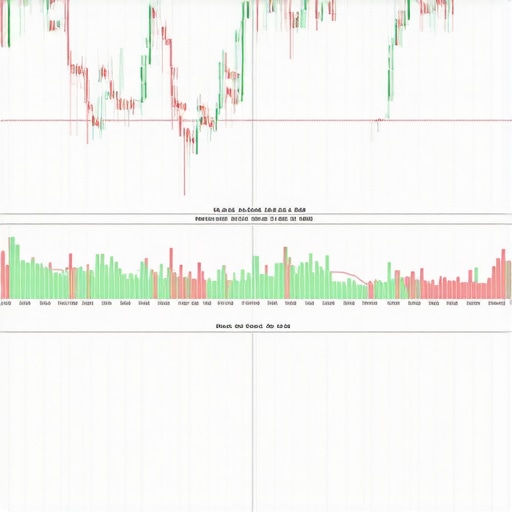
This relationship becomes crucial during monetary policy shocks; understanding these liquidity shifts enables the formulation of tactical allocations that capitalize on or hedge against such flow-induced price movements.
How do advanced liquidity indicators assist in preempting asset correlation shifts?
Market participants employing integrated liquidity analytics platforms observe indicators like the Liquidity Coverage Ratio (LCR) and the Financial Stress Index. Such metrics provide foresight into potential abrupt reallocations, empowering proactive adjustment of gold-stock buffers before widespread market reactions occur.
Dissecting the Influence of Innovation Cycles on Metal Demand
The acceleration of technological innovation, particularly in sectors like green energy and space exploration, elevates demand for precious metals, including gold, as they underpin advanced electronics and specialized components. This cyclical uptick influences supply chain dynamics, with potential ripple effects on prices and their economic relationships.
Notably, patent filings and R&D expenditure patterns in relevant industries correlate with short-term shocks or long-term trends in precious metal demand, adding another layer of sophistication to modeling gold-equity interactions.
Can technological innovation spur structural shifts in gold’s role within diversified portfolios?
Indeed, the rising integration of gold into green investment themes and advanced manufacturing may redefine its traditional safe-haven status, suggesting a reassessment of its correlational behavior with equities. Portfolio managers must incorporate cutting-edge industry trend analysis and supply-demand elasticity metrics to exploit these shifts effectively.
Leveraging Machine Learning for Asset Relationship Forecasting
Applying supervised learning models to vast datasets—including macroeconomic indicators, technical signals, and geopolitical risk scores—can unearth nonlinear patterns that traditional analysis overlooks. Techniques such as random forests and neural networks facilitate the anticipation of asset correlation regime changes, enabling dynamic rebalancing.
In recent studies, integration of ensemble machine learning frameworks proved especially adept at predicting gold and equity divergence during volatile periods, offering a strategic advantage for risk management.
Are you ready to integrate machine intelligence into your asset allocation process?
Adopting these state-of-the-art analytical methods transforms reactive strategies into proactive ones, empowering investors to anticipate and adapt to evolving market correlation landscapes. Embracing such advanced tools ensures a resilient, forward-looking portfolio aligned with the most intricate market signals.
Expert Insights & Advanced Considerations
The Role of Geopolitical Tensions in Asset Diversification
Geopolitical developments can rapidly alter the correlation dynamics between gold and equities, making it imperative for seasoned investors to monitor international conflict indices and sanctions reports. Such insights enable tactical reallocations that safeguard portfolios during market turmoil.
The Significance of Liquidity Conditions in Asset Pricing
Liquidity metrics, including credit spreads and systemic funding levels, serve as leading indicators of potential divergence or convergence between gold and stocks. Vigilant analysis of these indicators can offer early warnings and strategic entry points.
Technological Innovation and Its Impact on Metal Demand
Advancements in electronics and renewable energy sectors are increasingly influencing gold’s demand profile, potentially redefining its safe-haven status. Analyzing patent trends and supply chain dynamics helps anticipate structural market shifts.
Harnessing Machine Learning for Market Regime Prediction
Employing sophisticated algorithms on macroeconomic and technical datasets allows for the identification of transition phases in gold-stock correlations, facilitating timely and informed rebalancing decisions by expert investors.
Understanding Global Monetary Flows for Portfolio Optimization
Tracking cross-border capital movements and central bank reserve shifts provides nuanced insights into currency and commodity markets, enhancing the ability to anticipate asset relationship shifts and refine diversification strategies.
Curated Expert Resources
- World Gold Council – Offers in-depth research on supply-demand fundamentals and macroeconomic factors shaping gold prices, essential for expert-level analysis.
- Bloomberg Markets – Provides comprehensive coverage of monetary policy actions, geopolitical risks, and liquidity conditions influencing asset markets.
- Federal Reserve Reports – Critical for understanding macroeconomic trends, interest rate policies, and their implications on gold and equities.
- SSRN Papers on Machine Learning – Presents cutting-edge research on predictive modeling techniques applicable to asset correlation analysis.
- Council on Foreign Relations – Supplies geopolitical risk assessments vital for discerning macro shocks affecting asset relationships.
Final Perspective: Elevating Portfolio Strategies with Deep Market Foresight
Achieving mastery over the complex relationship between gold and stocks demands a multi-layered approach that integrates macroeconomic indicators, geopolitical analysis, and advanced quantitative techniques. For investors committed to excellence, leveraging authoritative resources and embracing sophisticated analytical tools not only enhances decision-making but also transforms portfolio management into a strategic art. Share your insights or questions to foster a community of high-caliber investors dedicated to navigating the intricacies of modern markets—where expertise and agility determine success.