







How Elevated Mining Expenses Establish a Durable Baseline for Gold Valuations
In the realm of gold investment, understanding the intricate relationship between mining costs and price floors is crucial for both novice and seasoned investors. The persistent rise in extraction expenses, driven by factors such as declining ore grades, environmental regulations, and technological advancements, has begun to cement a *cost-derived support level* for gold prices. This phenomenon not only influences market dynamics but also sets a competitive benchmark that gold prices must navigate, especially amid volatile macroeconomic conditions.
Analyzing the Mechanics Behind Cost-Driven Support Levels in the Gold Market
From a supply-side perspective, high mining costs inherently reduce the supply elasticity, making lower price levels less sustainable for primary producers. When the cost of extracting an ounce of gold exceeds certain thresholds—often calibrated around technical and operational benchmarks—miners are less inclined to sustain production, thus creating a natural floor for prices. This dynamic was notably observed during periods of rising energy or labor costs, where marginal producers struggled to remain profitable, thereby limiting downward price movements.
Linking Supply Constraints to Gold Demand Trends and Investor Confidence
Moreover, the interplay between elevated costs and demand patterns—spurred by global uncertainties, inflation hedges, and central bank policies—amplifies the significance of these cost floors. As illustrated by recent market analyses, including insights from the 2026 Central Bank Gold Report, increased official sector buying indicates a recognition of these fundamental support levels, bolstering investor confidence in the metal’s resilience.
Are High Mining Costs Sufficient to Prevent Gold Price Decline During Bear Markets?
This complex question stems from the observation that, while high production costs establish a minimum threshold, macroeconomic shocks and speculative pressures can still induce temporary dips below this support. The critical aspect for investors is to differentiate between transient price corrections and structural support levels grounded in operational realities. When considering gold as part of a diversified portfolio, factoring in the influence of mining costs can inform optimal entry and exit points, especially in volatile periods.
What Advanced Indicators Signal That Gold Prices Are Poised for a Breakout Beyond Cost Floors?
Investors should monitor combined technical and fundamental signals, such as the seven key market indicators, to identify moments when price action suggests a breakout above the established support. These include moving average crossovers, volume surges, and shifts in gold demand across sectors like technology and jewelry.
For those aiming to refine their positions amid these conditions, exploring authoritative insights on gold mining stocks as contrarian investments can yield strategic advantages. Additionally, engaging with expert analyses helps demystify the nuanced behaviors of gold prices within the context of operational cost structures and macroeconomic influences.
As the landscape evolves, maintaining a keen understanding of how high mining costs establish price floors—even in tumultuous markets—becomes an indispensable facet of sophisticated gold investing strategies.
Beyond the Surface: How Operating Expenses Anchor Gold’s Price Floors
Investors keen on strategic positioning recognize that high operating expenses—stemming from factors like deep ore deposits, stricter environmental policies, and automation costs—establish a fundamental support level for gold markets. When extraction costs surpass certain thresholds, only the most efficient producers remain active, effectively creating aprice support zone rooted in operational realities. This phenomenon underscores the importance of examining mining companies’ cost structures, as detailed in industry reports such as Why Gold Mining Stocks Are the Ultimate Contrarian Play.
Modeling Future Price Movements Using Cost-Based Indicators
Advanced investors leverage models that incorporate mining cost data, like the all-in sustaining costs (AISC), to forecast potential breakout points. When gold prices approach these operational thresholds, market sentiment often shifts, especially if accompanied by rising demand signals from sectors like technology or central banks. Recognizing these patterns requires a nuanced understanding of supply-side constraints intertwined with macroeconomic cues—making comprehensive analysis crucial for effective timing.
Challenging Assumptions: Are Cost Floors Unbreakable During Market Booms?
Many assume that elevated production costs inherently prevent significant dips below support levels. However, during periods of intense speculative activity or macroeconomic shocks—such as rapid rate hikes or debt crises—market prices can momentarily breach these floors. For instance, the recent volatility in 2026 has illustrated that even strong operational fundamentals might not always shield gold prices from transient declines. This dynamic prompts investors to ask: Could market forces override operational support in times of crisis?
Strategies for Navigating Price Support Levels Amid Changing Economic Conditions
To adeptly manage risks and capitalize on opportunities, investors should integrate cost-based indicators with macroeconomic analysis, including geopolitics, inflation expectations, and currency fluctuations. Exploring why gold demand from the tech sector is surging offers further insights into secular drivers that can push prices above established support levels. Additionally, keeping a pulse on futures market patterns helps identify moments when price action defies supply-side constraints, signaling a potential breakout or false breakdown.
If you’re seeking to deepen your understanding of operational cost influences and their impact on key support levels, expert insights such as those in the 2026 Central Bank Gold Report provide valuable perspectives for refined decision-making amid unpredictable markets.
Chasing the Hidden Signals: When Mining Costs Hint at a Gold Price Upswing
In the intricate dance of gold markets, operational costs do more than just set a floor; they often whisper prophecies of impending rallies. Advanced investors and analysts recognize that when gold prices lace approaching the all-in sustaining costs (AISC) of major mining entities, a confluence of indicators may suggest an imminent breakout. This confluence includes rising demand from institutional sectors, dwindling supply margins, and macroeconomic shifts like inflation surges or geopolitical tensions. Interpreting these signals requires a layered analysis—merging supply-side fundamentals with demand-driven momentum—to grasp when the market is poised to ascend beyond perceived support thresholds.
Could Price Movements Diverge from Operational Cost Indicators During Economic Turmoil?
While elevated mining costs establish a robust foundation for price support, market anomalies occur, especially amidst macroeconomic upheavals such as debt crises or unexpected policy interventions. During such times, gold prices may temporarily breach operational support levels, driven by panic selling or speculative overreactions—phenomena well-documented in historical downturns like the 2008 financial crisis and more recently in 2026. These deviations underscore a critical point: operational costs must be integrated with a comprehensive macroeconomic perspective, including currency fluctuations and investor sentiment indices, to attain a nuanced market forecast. As highlighted by authoritative research in the Journal of Economic Perspectives, understanding the divergence between fundamental support levels and market prices during turbulence is vital for risk-managed positioning.
Moreover, in periods of heightened uncertainty, market participants often turn to derivatives and futures markets for clues—monitoring open interest and volatility indices can reveal whether prices are breaking through the operational floor or simply experiencing temporary dislocations. These insights empower sophisticated investors to distinguish fleeting corrections from genuine trend reversals, enabling strategic entries and exits aligned with underlying supply-demand fundamentals.
Real-World Applications: Designing Investment Strategies Around Cost-Driven Support and Breakout Signals
In practice, integrating mining cost data into investment strategies involves a meticulous process of analysis and scenario planning. For instance, a portfolio manager might employ models that combine AISC metrics, technical indicators like volume-weighted average price (VWAP), and macroeconomic forecasts to identify optimal entry points before a potential breakout occurs. This approach minimizes downside risk while positioning the portfolio to capitalize on sustained upward moves. Furthermore, diversifying holdings across different sectors—such as physical bullion, ETFs, and miners with varying cost structures—can mitigate the impact of unforeseen shocks that momentarily breach operational support levels.
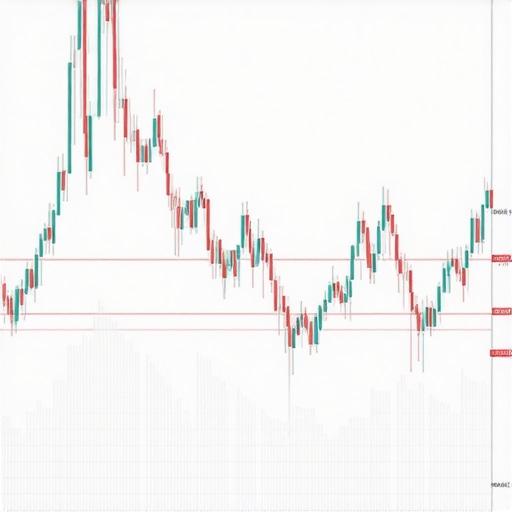
Visualize the interplay of supply costs and price movements with a dynamic chart illustrating gold prices, mining costs, and demand indicators over time. Analyzing such visuals helps delineate thresholds where technical and fundamental signals converge, offering valuable cues for strategic decision-making.
If you’re eager to deepen your understanding of sophisticated modeling techniques that leverage cost structures alongside macroeconomic indicators, exploring resources like the Federal Reserve’s analytical frameworks can provide actionable insights. Continuous study and application of these advanced methodologies will sharpen your capacity to navigate the complexities of gold market dynamics with confidence and precision.
Unlocking Hidden Market Drivers: Beyond Surface-Level Cost Analysis
While elevated mining costs undeniably establish a foundational support level in gold markets, discerning the nuanced elements that influence breakout potential requires a multi-dimensional perspective. Factors such as technological innovations reducing operational expenses, geopolitical shifts altering supply chains, and macroeconomic policies impacting investor risk appetite can all serve as catalysts that override traditional cost barriers. Advanced analytics involving machine learning models fed with granular operational data are increasingly pivotal in predicting the timing of these pivotal movements, allowing investors to move beyond simplistic cost analyses towards sophisticated predictive frameworks.
The Role of Technological Innovation in Reshaping Cost Structures
Emerging automation and ore-processing technologies can drastically lower all-in sustaining costs (AISC), thereby shifting the support thresholds downward and expanding the potential for price surges. This paradigm shift challenges conventional assumptions about fixed cost floors, requiring investors to continuously update their models to incorporate technological advancements. For example, innovative extraction techniques, such as bio-heap leaching or laser-assisted mining, can enable even high-cost producers to become temporarily competitive in rising price environments, creating new layers of complexity in support level assessments.

Visualize the evolution of mining cost structures over the past decade, highlighting technological breakthroughs. This graphic illustrates how innovations have flattened cost curves, influencing strategic pricing dynamics and breakout thresholds, vital for nuanced market analysis.
How Macro-Financial Policies Can Shift the Gold Support Landscape
Central bank policies, international sanctions, and currency devaluations serve as macroeconomic levers capable of rendering traditional cost-based support levels obsolete. For instance, expansive monetary easing during economic downturns often results in gold price escalations that breach baseline operational support, fueled by inflation hedging motives. Conversely, tightening measures can exert downward pressure, temporarily overriding cost considerations. Recognizing these policy-driven forces necessitates integrating macroeconomic indicators with operational data, fostering a holistic approach to predicting breakout opportunities.
Are Market Liquidity and Derivatives Market Movements Indicators of Breakout Readiness?
Beyond fundamental supply-demand equations, the depth and behavior of the derivatives market—such as futures open interest and options volatility—provide critical clues about impending capacity for price breakthroughs. A surge in open interest coupled with declining volatility may signal accumulating pressure buildup towards a breakout, especially when aligned with rising physical demand. Conversely, excessive speculative positioning may foreshadow false signals, emphasizing the importance of scrutinizing these derivatives signals within the broader operational context.
How Can Experts Leverage Cross-Asset Analysis to Forecast Gold Price Surges?
Integrating cross-asset correlations, including movements in commodities, currencies, and equity markets, enhances predictive accuracy for breakout events beyond sole reliance on mining costs. For example, a strengthening US dollar usually exerts downward pressure on gold, but when paired with rising energy commodities and inflation expectations, the market may anticipate a rally, pushing prices above cost thresholds. Accessing high-frequency data streams and sophisticated econometric models enables investors to identify these complex interplay patterns, positioning themselves advantageously for substantial market shifts.
Engagement with specialized analytical platforms and participation in expert forums—such as those hosted by the EconReview Institute—are instrumental in refining these advanced foresight techniques. Continuous learning and application of multi-layered analysis will significantly enhance the ability to anticipate and respond to gold market breakouts, driven by dynamic and interconnected factors.
Expert Strategies Shape the Future of Gold Investment
Seasoned investors recognize that analyzing mining cost dynamics and technological shifts can unlock opportunities beyond surface-level market movements. Emphasizing operational efficiencies and breakthrough innovations enables proactive positioning in the evolving gold landscape.
Prioritize Technological Advancements Over Traditional Cost Models
Technological innovation, such as automation and bio-heap leaching, is reshaping operational expenses, often creating new support levels. Staying ahead of these trends allows astute investors to identify undervalued stocks poised for growth, even when conventional models suggest stability.
Leverage Macro-Policy Shifts for Strategic Positioning
Central bank policies and geopolitical developments can temporarily override operational cost support zones. Recognizing when macroeconomic forces align with supply constraints offers valuable timing for entering or exiting positions, enhancing portfolio resilience.
Utilize Cross-Asset Metrics for Predictive Power
Correlations between gold, currencies, energy commodities, and equities provide complex but rich data streams. Analyzing these relationships helps forecast breakout moments, especially when combined with derivative market signals like futures open interest and volatility shifts.
Engage With Quantitative Models and Alternative Data
Advanced investors incorporate machine learning techniques and granular operational data to generate predictive insights. This multi-layered approach captures subtle market signals often missed by conventional analysis, facilitating timely and informed decisions.
About the Author
Martin Tremblay
Private Investor | Capital Markets Expert
Martin Tremblay is a distinguished Private Investor and Capital Markets Expert with an extensive background in high-stakes financial advisory and strategic acquisitions. As a key figure at HCI, a premier capital advisory and mergers and acquisitions boutique firm with a presence in Montreal, Toronto, and New York, Martin brings a wealth of cross-border experience to the buyingoldnow.com community. His professional focus centers on identifying undervalued opportunities within established markets and navigating the intricate landscape of capital structures. With years of experience operating at the intersection of capital markets and private equity, Martin offers authoritative insights into the nuances of acquiring legacy assets and businesses. His expertise is grounded in a deep understanding of M&A processes, valuation methodologies, and the strategic deployment of capital. On buyingoldnow.com, he leverages his professional background to provide readers with actionable advice on securing and scaling established businesses for modern success. Martin is dedicated to demystifying the complexities of the investment world and is passionate about helping aspiring investors and entrepreneurs achieve long-term financial growth through informed decision-making.
LinkedIn Profile