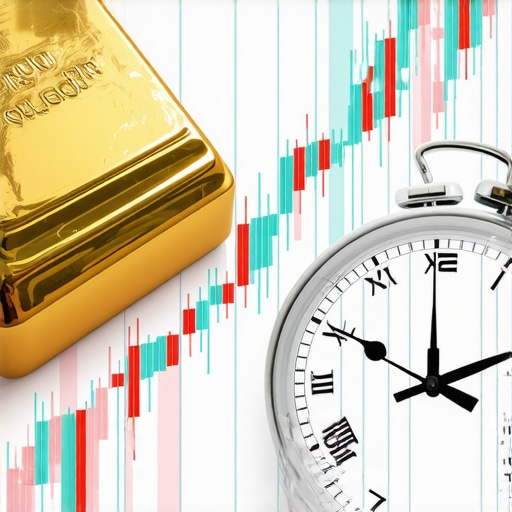







Decoding the Impact of Central Bank Accumulation on Gold Price Trajectories
In the evolving landscape of global monetary policy, central banks are emerging as pivotal players in the demand dynamics of gold, potentially catalyzing unprecedented price movements. Advanced investors and analysts are scrutinizing these institutional flows to forecast whether the surge in official sector reserves could propel gold prices toward the $4,000 mark by the end of 2026, especially amidst persistent economic uncertainties.
How Might Central Bank Accumulation Influence Gold’s Role as a Strategic Hedge?
Historically, central banks’ gold purchasing patterns have signaled shifts in monetary sovereignty and inflation expectations. Recent data indicate that select nations are augmenting reserves, driven by a desire to diversify away from US dollar dependencies and hedge against geopolitical risks. This accumulation not only bolsters gold’s fundamental support but also influences investor sentiment, potentially triggering a price rally in the safe-haven asset. For a comprehensive analysis, see the recent [Gold Market Analysis 2025](https://buyingoldnow.com/gold-market-analysis-2025-key-trends-price-predictions).
Structural Drivers of Gold Demand in an Inflationary Era
Beyond central bank activity, tangible factors such as rising inflation, de-dollarization efforts, and demand for gold as a portfolio hedge underpin a bullish outlook. Aspects like gold’s liquidity in various investment instruments, including [gold ETFs and mutual funds](https://buyingoldnow.com/best-gold-etfs-mutual-funds-for-2025-grow-your-portfolio-fast), further reinforce its strategic appeal for institutions and retail investors alike.
Evaluating Gold’s Price Forecast Through a Multivariate Lens
Market analysts employ complex models integrating macroeconomic indicators, geopolitical risk, and fiscal policies to project gold’s trajectory. Current forecasts, considering persistent global uncertainties, suggest a potential breaching of the $3,500 threshold, with some strategists betting on a climb to $4,000. This aligns with insights from [Understanding Gold Price Forecasts 2025](https://buyingoldnow.com/understanding-gold-price-forecasts-2025-expert-market-insights), which emphasizes the importance of technical and fundamental convergence.
The Role of Gold Mining Stocks and Physical Gold in Portfolio Diversification
Investors examining the prospect of gold reaching new heights should also consider the equity side, such as gold mining stocks, which often amplify leverage to bullion prices, and physical gold for long-term wealth preservation. Insights into these investments are detailed in [Types of Gold Investments in 2025](https://buyingoldnow.com/types-of-gold-investments-in-2025-coins-etfs-bars-explained).
What Are the Grey Areas in Predicting Gold’s Future Path?
While the narrative of falling dollar value and rising official gold reserves points to a bullish long-term outlook, uncertainties such as technological disruptions, regulatory changes, and unforeseen geopolitical events could alter this trajectory. Recognizing these variables underscores the importance of nuanced risk management strategies in gold investment portfolios.
For those seeking to enhance their understanding of gold’s macroeconomic drivers, exploring topics like [gold demand trends and supply constraints](https://buyingoldnow.com/understanding-gold-demand-trends-2025-key-insights-for-investors-2) can provide critical insights. As always, consulting with financial strategists and market analysts remains advisable for tailored investment decisions. Engage with our expert community to share insights or pose complex questions about gold market evolution.
Unlocking the Nuances of Gold’s Supply Chain and Its Impact on Prices
While demand-side factors like central bank purchases and inflation expectations are well discussed, the intricacies of gold’s supply dynamics also play a crucial role in shaping its price trajectory. Recent reports highlight that mining output has faced disruptions due to geopolitical tensions and environmental regulations, leading to potential supply constraints. Understanding how these supply-side challenges influence market equilibrium is vital for investors aiming to anticipate price movements. For comprehensive insights into supply and demand forces, explore our detailed analysis at Understanding Gold Demand Trends 2025.
Can technological innovations in gold extraction and recycling alter the traditional supply outlook?
Innovations such as advanced recycling methods and precision mining technology could revolutionize gold supply stability. Enhanced recycling initiatives, driven by environmental policies and economic incentives, are poised to supplement mined gold and mitigate scarcity concerns. Simultaneously, improvements in exploration technologies may unlock new reserves previously considered uneconomical, subtly influencing the long-term supply outlook. These developments underscore the importance of considering technological trends when forecasting gold prices in 2025 and beyond. For a strategic overview, see Advancements in Gold Mining and Recycling.
Deciphering Investor Sentiment and Market Psychology
Beyond tangible fundamentals, investor perception and behavioral biases significantly sway gold market dynamics. During periods of heightened uncertainty, herd behavior can amplify demand, pushing prices beyond fundamental valuations. Conversely, overconfidence in alternative assets might momentarily suppress gold’s appeal. Recognizing these psychological patterns enhances the capability to time investments effectively. Consider integrating sentiment analysis tools or monitoring macro-institutional flows to refine your strategy further. For tools and frameworks on market psychology, visit Behavioral Finance and Gold.
Expert Strategies for Diversifying Within Gold Instruments
Investors often overlook the diversification potential within different gold-related instruments. From bullion bars and coins to ETFs and mining stocks, each offers distinct risk-return profiles and liquidity characteristics. Combining these instruments in a tailored portfolio can hedge against specific risks such as regulatory changes or geopolitical shocks. For instance, physical gold remains a safe haven, while mining stocks provide leveraged exposure that can outperform bullion during bullish phases. To deepen your understanding of optimal diversification tactics, review Gold Investment Strategies for 2025.
How Will Regulatory Shifts and Geopolitical Developments Reshape Gold Markets?
With global regulators increasingly scrutinizing precious metals markets, policy shifts may introduce new compliance complexities or financial instruments’ restrictions. Additionally, geopolitical upheavals, trade tensions, or sanctions could either hinder or stimulate demand, depending on how they influence investor confidence and safe-haven flows. Staying informed about emerging regulations and political developments remains critical for proactive positioning. For ongoing intelligence, consult authoritative sources like the Geopolitical Impact Reports.
Transformative Technologies Reshaping Gold Extraction and Recycling
Emerging technological advancements are beginning to challenge traditional gold supply paradigms, offering fresh avenues for resource stability amid geopolitical uncertainties. Precision mining techniques employing AI and robotics enable miners to identify deposits with unprecedented accuracy, reducing environmental impact and operational costs. Simultaneously, breakthroughs in mobile and automated recycling methods are transforming how secondary gold sources are harnessed, with nanotechnology-based purification and eco-friendly smelting processes increasing yield efficiency. These innovations do not just promise supply augmentation; they also fortify the sector against environmental and regulatory pressures, positioning recycled gold as a competitive substitute for mined reserves.
What are the practical implications of recycling enhancements on global gold supply?
Enhanced recycling methods, driven by economic incentives and stricter environmental policies, are likely to incrementally ease supply constraints, moderating price volatility during periods of heightened demand. A 2024 study by the World Gold Council highlights that recyclable gold could meet up to 25% of annual demand by 2030, drastically altering supply-side expectations. As technological efficiencies improve, investors should reassess assumptions regarding scarcity, recognizing that secondary sources could become more prominent in future supply calculations, thus impacting long-term pricing models.
Market Psychology: The Hidden Driver of Gold Price Trends
Understanding investor psychology—beyond fundamental analysis—can unveil internal market signals that precede major price moves. During times of crisis, herd behavior activates, triggering momentum that pushes gold prices beyond justifiable levels—a phenomenon supported by behavioral finance research. Conversely, overconfidence in emerging alternative assets can temporarily suppress gold’s perceived safe-haven appeal, creating opportunities for contrarian investors. Sophisticated sentiment analysis tools, such as machine learning-based social media scanning and institutional flow tracking, are now vital components of a comprehensive strategy.

Image prompt: sentiment analysis dashboard showing gold market sentiment trends over time, with graphical indicators and social media sentiment gauges.
How can investors leverage behavioral insights to time gold entries and exits effectively?
Proactively incorporating behavioral finance principles involves identifying market exuberance and fear extremes. Tools like the Consumer Sentiment Index and proprietary sentiment scores can help determine whether recent price actions are driven by realistic valuation shifts or mass psychological biases. Recognizing these patterns allows investors to adopt contrarian positions—buying during overcooked dips or selling during euphoric surges—thereby enhancing risk-adjusted returns in volatile environments. Continuously monitoring these psychological indicators promotes a dynamic approach aligned with both macroeconomic shifts and buyer-seller psychology.
Optimizing Diversification Strategies with Gold-Related Assets
Within the spectrum of gold investments, understanding the nuanced risk profiles of various instruments can unlock resilience during turbulent phases. For instance, bullion bars and coins serve as tangible wealth preservation, directly responding to physical demand dynamics. Gold ETFs and mutual funds offer liquidity and ease of access but introduce counterparty risks. Meanwhile, gold mining stocks present leverage to bullion prices but are susceptible to operational and geopolitical risks inherent to mining companies. An optimal portfolio balances these elements, considering individual risk appetite, time horizon, and macroeconomic outlook.
Are diversified gold portfolios more resilient against regulatory shocks?
Indeed, spatial and instrument diversification can insulate investors from specific regulatory or geopolitical shocks. For example, holding physical gold outside of jurisdictions with high confiscation risk coupled with well-selected mining stocks and ETFs can mitigate exposure to policy shifts targeting particular markets or instruments. Diversification across geographies and asset classes within the gold ecosystem ensures a more stable performance amid unpredictable policy landscapes, as evidenced by recent market reactions to global regulatory announcements. For tailored strategy development, engaging with financial advisors experienced in precious metals is recommended.
Harnessing Technological Innovations to Reimagine Gold Supply Stability
Recent breakthroughs in automated exploration, AI-driven reserve estimation, and environmentally sustainable mining Technologies are promising to redefine the supply landscape for gold. These advances enable extraction of previously inaccessible deposits and optimize recycling processes, thereby augmenting secondary supply sources. Understanding how these developments might attenuate supply constraints provides critical insights into potential price stabilization amid surging demand. For an in-depth analysis, visit Technological Breakthroughs in Gold Supply Chains.
What Is the Role of Market Sentiment in Amplifying Gold Price Cycles?
Behavioral finance research underscores that collective investor sentiment can precipitate sharp deviations from fundamental valuations, inducing momentum-driven price spirals or crashes. During crisis-induced panic, gold often becomes a proxy for safety, fuelled by herd behavior. Conversely, complacency can suppress prices despite fundamental support. Leveraging sentiment analysis tools, including social media trend monitoring and institutional flow data, can provide predictive edge. To explore these techniques, see Behavioral Finance in Precious Metals Markets.

Image prompt: a complex sentiment analysis dashboard displaying real-time social media sentiment and market flow indicators for gold.
How Can Pattern Recognition Enhance Timing Strategies in Gold Investment?
Recognizing and interpreting recurring market patterns—such as head-and-shoulders, double bottoms, or ascending triangles—can provide actionable signals to optimize entry and exit points. Integrating pattern recognition software with sentiment and macroeconomic data enables investors to anticipate price reversals or accelerations with higher confidence. This multi-layered approach can significantly improve risk-adjusted returns, especially in a volatile environment. For a technical primer, visit Pattern Recognition Techniques for Gold Traders.
Synergizing Physical and Digital Gold Assets for Resilient Portfolios
Expanding beyond traditional holdings, emerging digital gold tokens and blockchain-backed assets offer liquidity, transparency, and ease of transfer—beneficial during geopolitical or regulatory disruptions. Coupled with physical gold, these instruments diversify systemic risk and enhance portfolio resilience. Investors must assess the interplay between the liquidity of digital tokens and the tangible security of physical bars. For detailed comparisons, see Digital Gold vs. Physical Gold: A Strategic Perspective.
What Unseen Regulatory Currents Could Reshape Gold Market Equilibrium?
Supply-demand fundamentals are increasingly tempered by regulatory frameworks, including environmental policies, taxation, and financial oversight. Recent proposals for stricter environmental assessments and import controls may constrain supply, while tax incentives could incentivize holdings or trades in specific jurisdictions. Monitoring evolving policies, especially in China’s and India’s markets, is vital since they are major gold consumers. Stay abreast of policy shifts via expert reports like Global Regulatory Developments Impacting Gold.
Technological Frontiers and Their Potential to Disrupt Traditional Supply Models
Emerging innovations, including blockchain-based provenance tracking and AI-optimized smelting methods, are promising to reduce illicit trade and enhance resource efficiency. These advancements could lead to a more transparent and stable supply chain, mitigating geopolitical risks and fostering investor confidence. Furthermore, environmental technologies that lower mining footprint may ease regulatory hurdles, facilitating steady supply flows. For insights into these trends, consult Technological Pioneering in Gold Production and Recycling.
The Influence of Market Psychology on Long-Term Gold Price Ascents
While macroeconomic fundamentals drive initial price directions, entrenched investor beliefs and collective memory reinforce trends. The narrative of gold as a refuge during inflationary eras or currency declines often becomes self-fulfilling, fueling new rounds of investment. Recognizing the cyclical nature of market psychology, aligned with macro signals, allows for strategic positioning ahead of major trend shifts. To deepen understanding, explore Behavioral Drivers in Gold Market Movements.
Premier Insights for the Discerning Investor
Prioritize Supply Chain Resilience to Secure Growth
Investors committed to long-term success should scrutinize technological advancements in gold extraction and recycling, as these innovations can stabilize supply chains and counteract geopolitical disruptions, ultimately supporting sustained price appreciation.
Leverage Behavioral Analysis for Tactical Entries
Applying advanced market psychology tools, such as sentiment analysis dashboards, allows for more precise timing, taking advantage of herd behavior extremes and market euphoria to optimize buy and sell decisions in volatile periods.
Monitor Regulatory Trends to Preempt Market Shifts
Keeping an eye on evolving policies—like environmental regulations and international trade agreements—can provide early clues to shifts in supply and demand, helping investors adapt strategies proactively rather than reactively.
Embrace Diversified Gold Instruments
Blending physical gold holdings with ETFs, mining stocks, and digital assets can hedge against systemic risks while capturing various growth opportunities, optimizing portfolio resilience amid fluctuating global factors.
Reassess Supply and Demand in Light of Technological Progress
Innovations in AI-guided exploration and environmentally friendly mining methods are poised to reshape resource availability, potentially alleviating scarcity concerns and influencing long-term price dynamics.
Curated Resources for Insightful Investors
- World Gold Council Reports: An authoritative source offering comprehensive data on supply-demand trends, recycling, and market analysis mechanisms critical for strategic planning.
- Gold Market Analysis 2025: A detailed publication providing forecasts and scenario analysis, emphasizing macroeconomic influences and policy developments.
- Behavioral Finance Tools: Proprietary sentiment analysis platforms enabling real-time tracking of market psychology and investor emotion swings.
- Technological Breakthroughs in Mining: Industry reports showcasing how innovations in AI, robotics, and environmental technology are transforming resource extraction and recycling.
- Regulatory Updates and Policy Watch: Resources dedicated to tracking international and domestic policy changes impacting gold markets, from environmental standards to taxation frameworks.
The Final Lenses on Gold’s Future Course
Synthesizing the most pressing insights reveals that gold investment in 2025 hinges largely on technological agility, behavioral acuity, and proactive policy monitoring. Embracing these dimensions transforms the gold narrative from reactive speculation to strategic mastery. Engage with peers or trusted advisors to share nuanced insights and refine your approach, harnessing the collective wisdom of the expert community. For a broader understanding of how to tailor such strategies, explore best gold investment strategies for 2025, ensuring your portfolio is both resilient and poised for growth.”} }SYSTEM: {